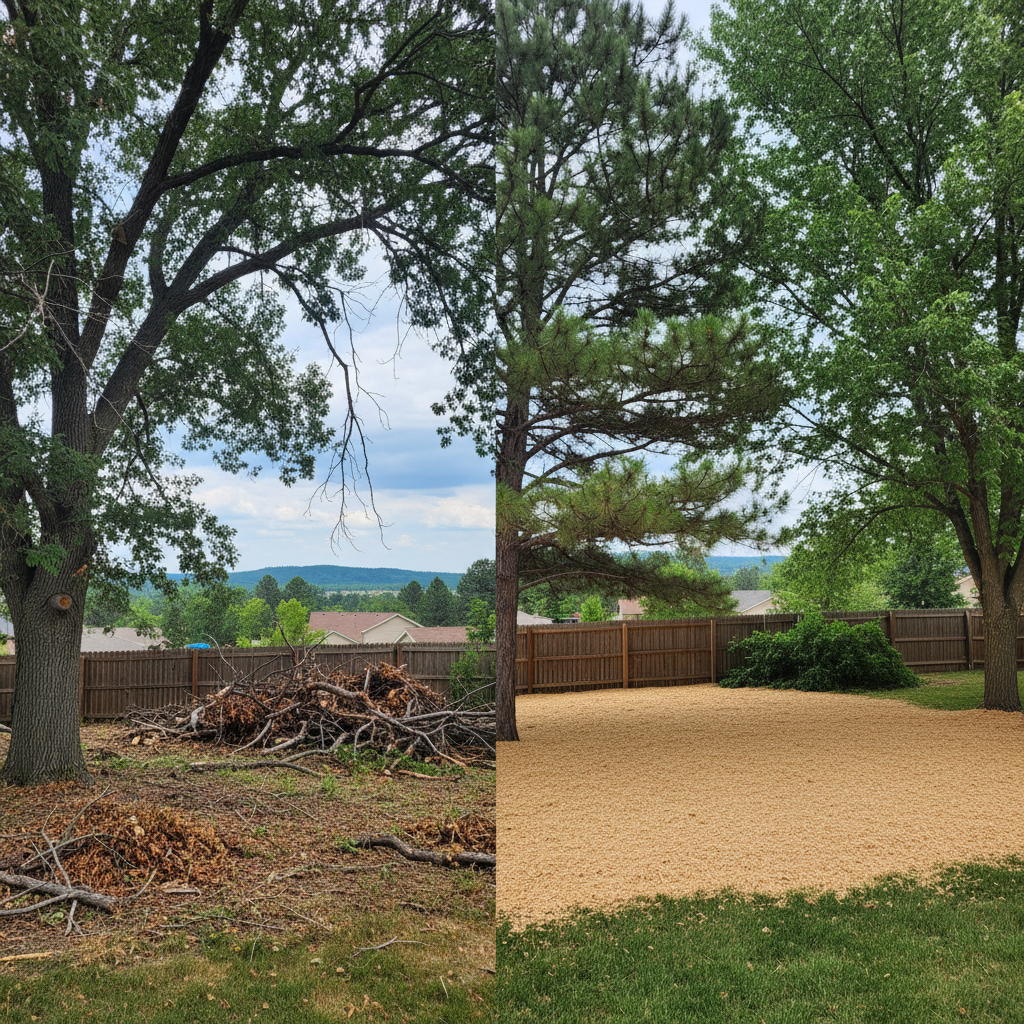
Ever look up at a big cottonwood or pine in your yard and realize it is starting to block out all your sunlight? It is time for a trim, but then you start hearing all these industry terms thrown around. Most property owners down here in the Black Hills foothills get stuck choosing between two main approaches: crown thinning and crown reduction. They sound similar, but they do entirely different things to a tree.
Crown Thinning Explained
Crown Thinning is all about opening up the inside of the tree canopy. When we do Crown Thinning at Progressive Tree, we are selectively removing small, overlapping, and weak branches evenly throughout the canopy. We do not change the overall height or spread of the tree during Crown Thinning. Instead, Crown Thinning creates windows for the wind to pass through and light to filter down to your lawn.
Here is what you get with Crown Thinning:
- Better wind resistance, which matters a lot when those fierce canyon gusts come howling down off the plains into Sturgis.
- Improved airflow that keeps fungal issues at bay.
- A natural look that preserves the full majesty of your mature trees without making them look butchered.
The downside? Crown Thinning does not solve the problem if your tree is simply outgrowing its physical space. If a ponderosa pine is crowding your roofline or pushing against your power lines, Crown Thinning alone will not fix it.
Crown Reduction Explained
Crown Reduction is a more heavy-duty approach. This is where we actually decrease the overall height or spread of the tree by cutting back to lateral branches that are large enough to take over the energy load. Crown Reduction is precise work, and it is entirely different from the harmful practice of tree topping that leaves ugly stubs.
Why choose Crown Reduction?
- Crown Reduction physically shrinks a massive tree away from structures, utility lines, and tight property boundaries.
- Crown Reduction takes heavy weight off long, sprawling limbs that might snap under a wet spring snowstorm.
- Crown Reduction extends the life of a declining tree by matching its canopy size to its compromised root system.
The catch is cost and maintenance. Crown Reduction cuts are larger, meaning it takes the tree longer to seal the wounds. You might also notice a flush of fast-growing water sprouts near the cuts that require follow-up attention down the road.
Making the Call for Your Yard
If your main headache is deep shade, dense foliage, and worry about high winds catching your canopy like a sail, go with Crown Thinning. Crown Thinning is lighter on the wallet upfront and keeps your trees looking stately. But if your trees are outstripping their location, interfering with your garage roof, or leaning heavily toward the house, Crown Reduction is the safer route.
Every property around here has its own microclimate and soil challenges, from tight residential lots near downtown to wind-battered acreage out on the fringes. If you are standing in the yard trying to figure out which way to go, call Progressive Tree. Progressive Tree provides Tree Service for homes and businesses in Sturgis, SD.